
As I was savoring the last few bites of my homemade Bibim Guksu, the delightful crunch of fresh cucumbers mingling with the vibrant tang of gochujang sauce, I thought about how this dish encapsulates the essence of summer. Bibim Guksu, or Korean spicy cold noodles, is not only a feast for the senses but also an effortless way to impress your family and friends with a quick meal that’s both vegan-friendly and effortlessly delicious. In just 10 minutes, you can create a colorful plate of chewy somyeon noodles layered with bold flavors and topped with garden-fresh vegetables. Whether you’re looking for a refreshing lunch option or something to serve at your next picnic, this recipe is sure to be a new favorite. Ready to dive into the world of Korean cuisine with me? Let’s get started!
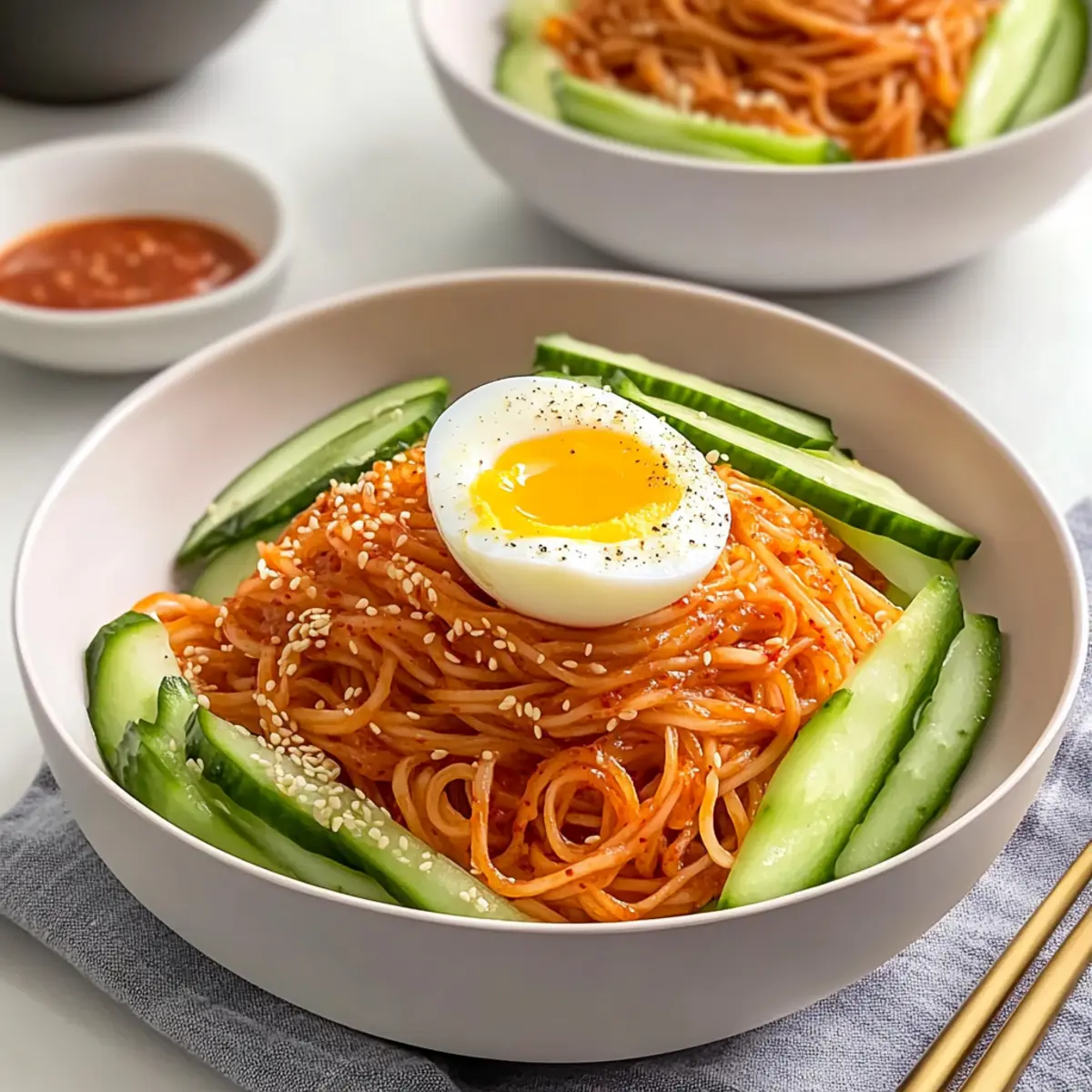
Why is Bibim Guksu a Summer Must-Have?
Delightful Freshness: Each bite bursts with the crispness of cucumbers and the vibrant tang of gochujang, creating an unforgettable flavor profile perfect for warm days.
Quick Prep Time: In just 10 minutes, you can whip up a satisfying meal that delights both your palate and your schedule.
Versatile Variations: Customize your bowl by adding in a variety of fresh veggies or proteins like tofu or chicken to suit your taste.
Vegan-Friendly: This dish is not only delicious but can easily cater to vegan diets, making it accessible for everyone.
Crowd-Pleasing Appeal: Serve Bibim Guksu at your next gathering, and watch it disappear as friends rave about its unique flavors! If you want to explore more simple yet enticing recipes, check out some of my favorite quick meals.
Bibim Guksu Ingredients
Get ready to whip up a delightful bowl of Bibim Guksu with these essential ingredients!
For the Noodles
- Somyeon Noodles – Thin wheat flour noodles that are key for that authentic chewy texture.
For the Sauce
- Gochujang – This sweet and spicy Korean chili paste is essential for deep flavor; sriracha can be used if you’re in a pinch.
- Gochugaru – Adds an extra kick of heat; feel free to substitute with cayenne pepper for a similar spicy effect.
- Soy Sauce – A splash adds umami richness; gluten-free soy sauce works for those avoiding gluten.
- Sesame Oil – Brings a toasty aroma to your dish; any neutral oil will work, but the taste will be slightly different.
- Rice Vinegar – Provides a perfect tang; apple cider vinegar can lend a unique note if you’re out of rice vinegar.
- Garlic – Freshly minced offers the best flavor; in a rush? Powdered garlic is a quick alternative.
- Honey – Balances the heat with sweetness; swap it for agave syrup if you need a vegan option.
For the Toppings
- Cucumber – Crunchy and refreshing; substitute with julienned bell peppers or carrots for a colorful twist.
- Soft-Boiled Egg – Adds creaminess and protein; skip this for a completely vegan dish.
- Sesame Seeds – A lovely nutty garnish; crushed nuts can be a delightful replacement.
- Kimchi – Elevates the flavor profile; any pickled vegetable serves as a delicious alternative.
With these ingredients, you’re all set to create a stunning Bibim Guksu, bursting with flavor and color! Enjoy your culinary journey into Korean cuisine!
Step‑by‑Step Instructions for Bibim Guksu
Step 1: Make the Sauce
In a medium bowl, combine 2 tablespoons of gochujang, 1 tablespoon of gochugaru, 2 tablespoons of soy sauce, 1 tablespoon of sesame oil, 1 tablespoon of rice vinegar, 1 minced garlic clove, and 1 tablespoon of honey. Stir the mixture vigorously until it becomes a smooth, thick paste that’s glossy and vibrant, showcasing a beautiful red hue. This rich sauce will be the heart of your Bibim Guksu.
Step 2: Cook the Noodles
Bring a large pot of water to a rolling boil over high heat. Once boiling, add about 200 grams of somyeon noodles and cook according to package instructions, generally about 4-5 minutes, until they’re tender yet still chewy. Drain the noodles and immediately rinse them under cold running water for 1-2 minutes to stop the cooking process and cool them down; they should feel silky and wiggly.
Step 3: Combine the Noodles and Sauce
In a large mixing bowl, add the cooled noodles and pour the prepared sauce over them. Using tongs or chopsticks, gently toss the noodles with the sauce for 1-2 minutes until every strand is evenly coated and the vibrant colors of the Bibim Guksu shine through. Aim for a glossy finish that clings to the noodles, promising a delightful flavor in each bite.
Step 4: Garnish and Serve
Transfer the beautifully sauced noodles to serving plates or bowls and top with thinly sliced cucumbers, a soft-boiled egg halved, and a sprinkle of sesame seeds for added crunch. If desired, add a side of kimchi for an extra zing. Serve immediately while the flavors are fresh and the noodles remain chilly, ensuring a refreshing dish in every bite.
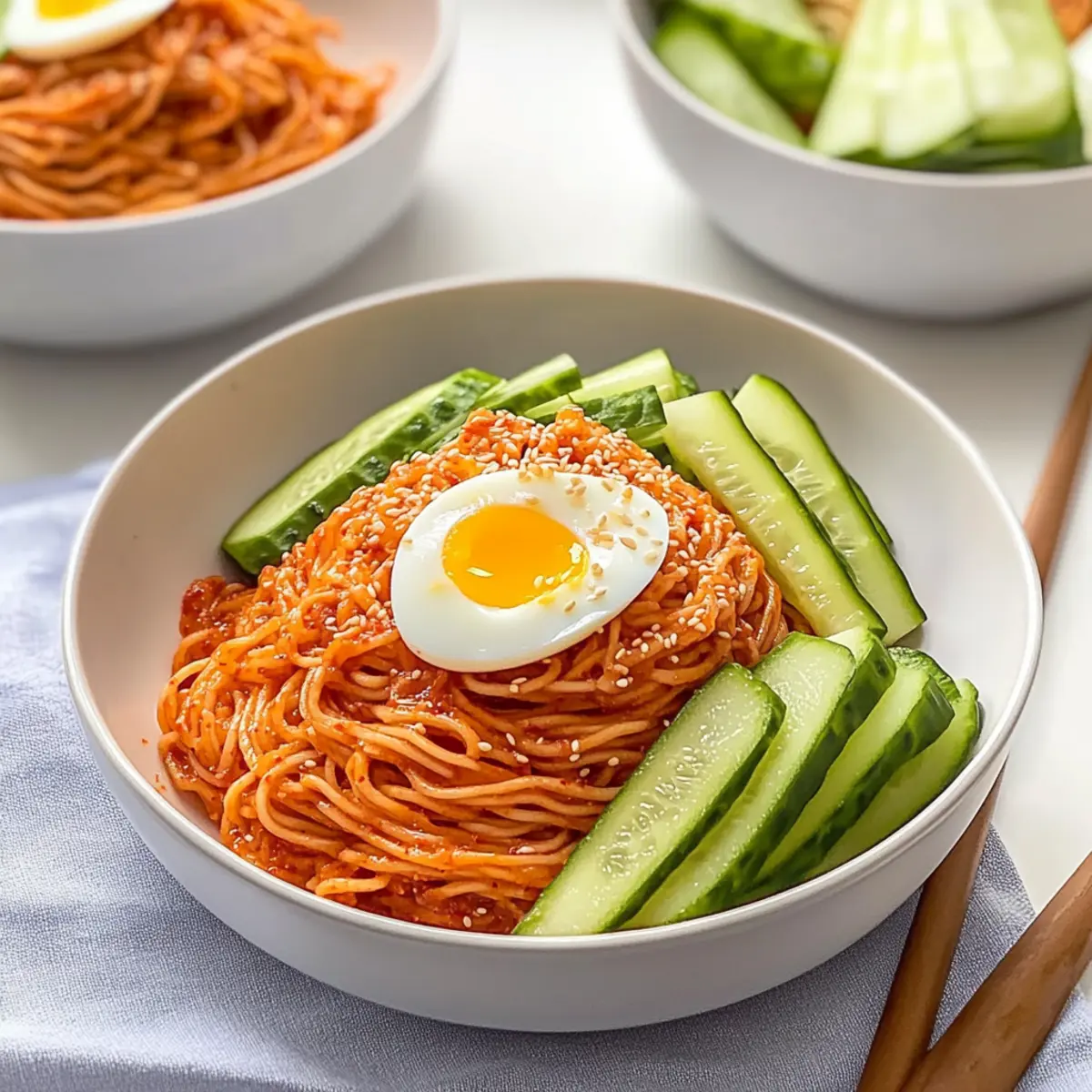
What to Serve with Bibim Guksu
Pairing your Bibim Guksu with delightful sides can elevate your meal and make your dining experience even more enjoyable.
- Cucumber Salad: A crunchy, tangy salad made with fresh cucumbers and sesame oil complements the noodles beautifully, adding a refreshing bite.
- Kimchi: This classic Korean side dish brings a spicy, fermented crunch that perfectly contrasts with the creamy noodles, enriching your plate’s flavors.
- Braised Tofu: Soft and savory, braised tofu adds a wonderful umami flavor, creating a heartier meal that satisfies every palate.
- Steamed Edamame: Simple yet nutritious, these tender soybeans offer a mild flavor that balances the heat of the Bibim Guksu beautifully.
- Cold Soba Noodles: For a unique twist, serve chilled soba noodles tossed in a light soy dressing, marrying different noodle textures while keeping things cool.
- Fresh Fruit Platter: Bright, juicy fruits like watermelon, melon, and berries make for a perfect sweet conclusion to your meal, refreshing the palate after spicy noodles.
- Iced Green Tea: A cool and invigorating drink, iced green tea provides a soothing finish that harmonizes with the intense flavors of the Bibim Guksu.
Storage Tips for Bibim Guksu
Fridge: Store leftover Bibim Guksu in an airtight container for up to 3 days, ensuring it remains fresh and flavorful.
Freezer: While it’s best enjoyed fresh, you can freeze the sauce separately for up to 1 month. Just thaw before mixing with freshly cooked noodles.
Reheating: This dish is best served cold, so there’s no need to reheat. Enjoy your spicy cold noodles straight from the fridge for maximum refreshment!
Serving Suggestion: If you have garnishes like cucumbers or soft-boiled eggs, add them fresh just before serving to keep their crunch and texture intact.
Make Ahead Options
Bibim Guksu is an excellent choice for meal prep, allowing you to savor vibrant flavors without the hassle on busy weeknights! You can prepare the sauce up to 3 days in advance by mixing together gochujang, gochugaru, soy sauce, sesame oil, rice vinegar, garlic, and honey, then store it in an airtight container in the refrigerator. The somyeon noodles can also be cooked, cooled, and refrigerated for up to 24 hours before serving. Just remember to rinse them in cold water to keep that delightful chewy texture. When you’re ready to enjoy, simply toss the noodles with the prepared sauce, garnish with fresh cucumbers, and your Bibim Guksu will be just as delicious and refreshing!
Expert Tips for Bibim Guksu
- Cool Noodles Thoroughly: Ensure the somyeon noodles are completely cool before mixing them with the sauce; this prevents them from becoming mushy and enhances texture.
- Adjust Spice Levels: If you enjoy a milder taste, start with less gochugaru and gradually add more until it meets your preferred heat.
- Customize Toppings: Feel free to experiment with toppings! Shredded carrots or bell peppers add extra crunch and color, making your Bibim Guksu visually appealing.
- Perfect the Sauce: Adjust the amount of honey based on your sweetness preference. Too much can overwhelm the dish, so start with a smaller amount and taste as you go.
- Store Properly: Leftovers should be stored in an airtight container in the fridge for up to 3 days; serve cold for the best experience.
Bibim Guksu Variations & Substitutions
Feel free to explore your creativity with Bibim Guksu by trying out these tasty twists!
- Vegetable Boost: Add shredded cabbage or bean sprouts for extra crunch and nutrition; they enhance the texture beautifully.
- Protein Power: Toss in tofu, chicken, or shrimp to make it heartier; each addition brings a satisfying and savory twist.
- Heat Adjustment: Play with the spice levels by varying the amount of gochujang and gochugaru; find the perfect balance for your taste buds!
- Dairy-Free Delight: Omit the soft-boiled egg for a completely vegan dish; you’ll still enjoy a fulfilling meal packed with flavor.
- Exotic Infusions: Try mixing in a spoonful of kimchi for an extra kick; it complements the dish’s zestiness perfectly!
- Nutty Garnish: Instead of sesame seeds, sprinkle crushed peanuts for an added crunch and depth; this twist is especially delightful!
- Zesty Alternative: Swap rice vinegar with lemon juice for a brighter, tangy note; it’s a refreshing change that enhances the dish!
- Fruit Fusion: Add fresh slices of mango or peach for a unique sweet twist; it marries beautifully with the spicy and tangy elements.
The world of Bibim Guksu is yours to explore—enjoy making it your own!
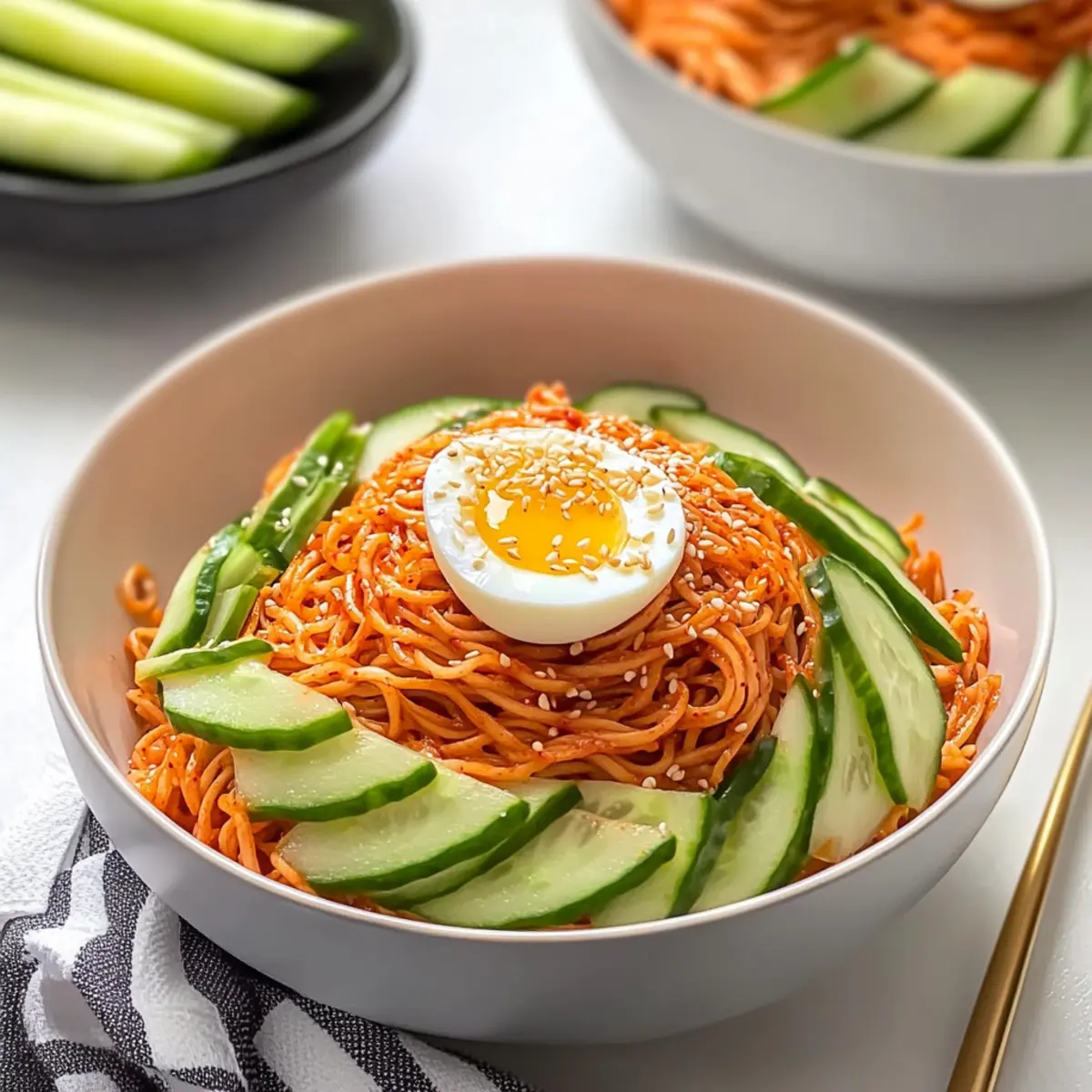
Bibim Guksu Recipe FAQs
What type of noodles should I use for Bibim Guksu?
I recommend using somyeon noodles, which are thin wheat flour noodles essential for that authentic chewy texture. If you can’t find somyeon, you could use thin spaghetti as an alternative, but the taste and texture will vary slightly.
How should I store leftover Bibim Guksu?
Absolutely! Store any leftover Bibim Guksu in an airtight container in the refrigerator for up to 3 days. It’s best enjoyed cold, so there’s no need to reheat. Just serve it straight from the fridge for the most refreshing experience.
Can I freeze Bibim Guksu?
Yes, you can freeze the sauce separately for up to 1 month! To do this, prepare the sauce as directed, then place it in a freezer-safe container. When ready to enjoy, thaw the sauce overnight in the refrigerator, and mix it with freshly cooked somyeon noodles. This keeps the dish fresh and vibrant.
What can I do if my sauce is too spicy?
Very! If you find the sauce is too spicy for your taste, start by reducing the amount of gochugaru used or add a little extra honey to balance the heat. You can also dilute the sauce with a bit of water or additional soy sauce, adjusting to your preferred flavor. Taste as you go to create the perfect balance.
Are there any dietary considerations for Bibim Guksu?
Absolutely! Bibim Guksu can be made vegan-friendly by omitting the soft-boiled egg or substituting it with tofu for added protein. Additionally, if you’re concerned about allergies, check the labels on sauces and condiments. Gluten-free soy sauce works well for those avoiding gluten.
How can I choose fresh cucumbers for my Bibim Guksu?
When selecting cucumbers, look for ones that are firm, with a smooth skin, and without dark spots or blemishes. Fresh cucumbers should feel heavy for their size, indicating that they’re juicy and crisp. This will enhance the overall freshness and crunch in your Bibim Guksu!
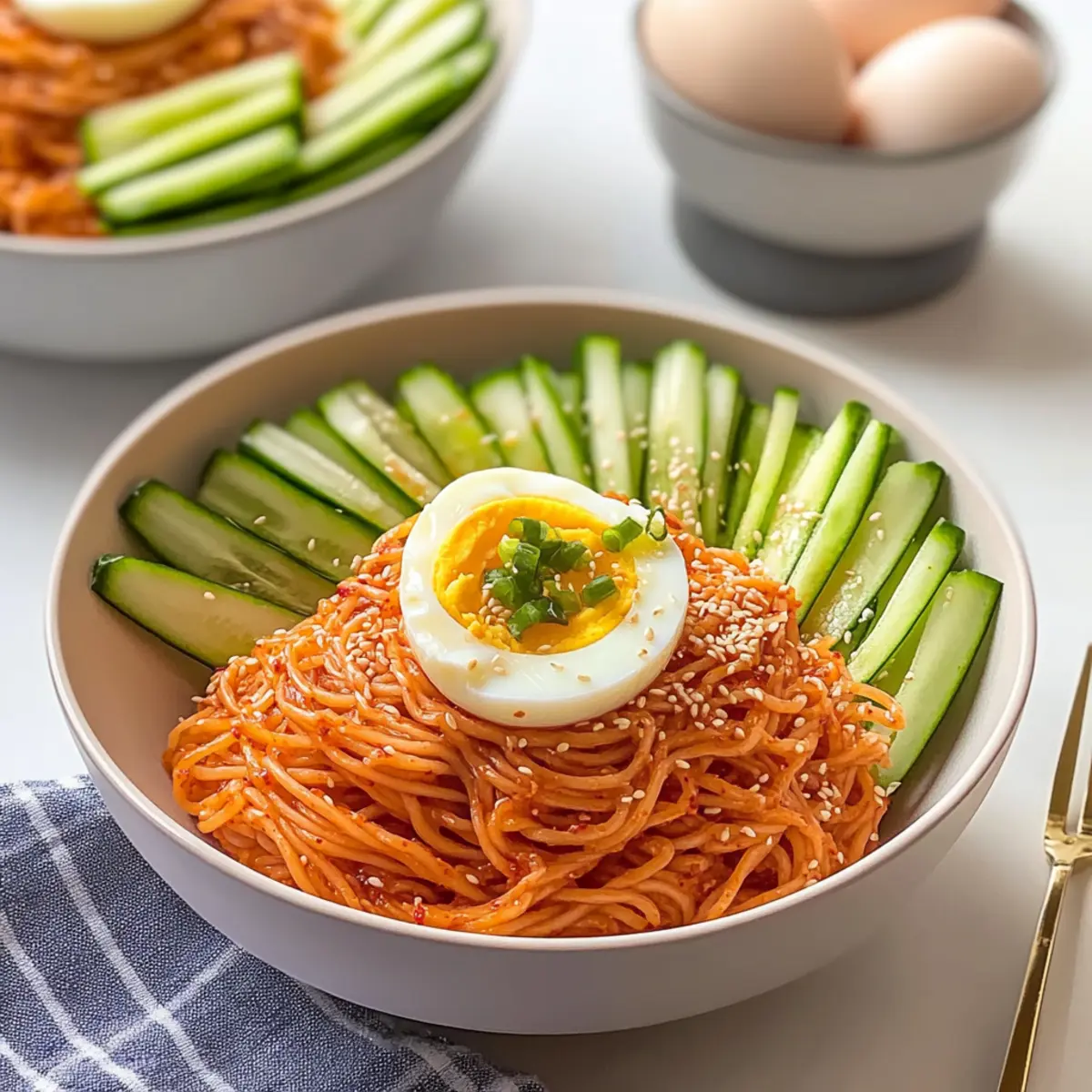
Delicious Bibim Guksu: Quick Spicy Cold Noodles You’ll Love
Ingredients
Equipment
Method
- In a medium bowl, combine gochujang, gochugaru, soy sauce, sesame oil, rice vinegar, minced garlic, and honey. Stir until it becomes a smooth sauce.
- Bring a large pot of water to a boil. Add somyeon noodles and cook for 4-5 minutes until tender. Drain and rinse under cold water.
- In a large bowl, combine cooled noodles with the prepared sauce and toss until noodles are evenly coated.
- Transfer noodles to serving plates, garnish with cucumber, soft-boiled egg, sesame seeds, and serve with kimchi.
Leave a Reply