
The sweet and savory aroma of sizzling vegetables fills the air as I tilt my head toward the pan, lost in nostalgia. Today, I’m excited to share my version of Vegetable Japchae, a beloved Korean dish that promises to brighten any table with its vibrant colors and cheerful flavors. Not only is this recipe a breeze to whip up on busy weeknights, but it’s also a delightful way to enjoy a medley of wholesome, colorful veggies and chewy glass noodles. Whether you’re crafting it as a comforting main course or a stunning side dish for gatherings, your guests will be captivated by its unique taste and texture. Ready to dive into this savory adventure? Let’s get cooking!
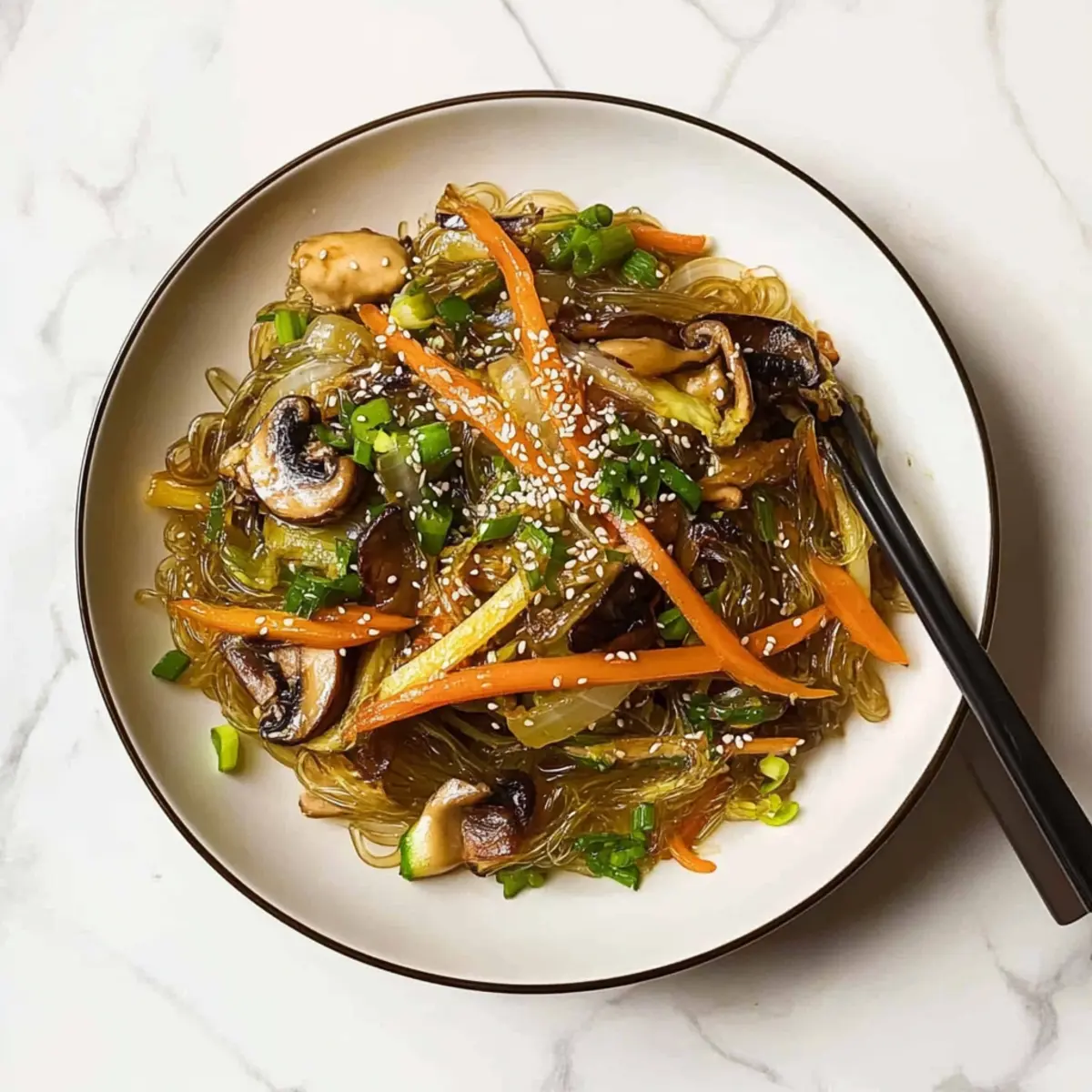
Why is Vegetable Japchae a must-try?
Colorful presentation: This dish is a visual feast, showcasing a rainbow of vegetables alongside the glossy glass noodles that will impress anyone at your table.
Easy to customize: Whether you prefer crunchy bell peppers or earthy mushrooms, you can easily adapt the ingredients to suit your tastes. For inspiration, check out my Winter Vegetable Quiche for another colorful dish!
Wholesome goodness: Packed with nutrients from the fresh veggies, this recipe is not just delicious but also a nourishing choice for you and your family.
Quick preparation: With a cooking time of just 30 minutes, this makes a perfect weeknight dinner that doesn’t compromise quality or taste.
Crowd-pleaser: Serve it at gatherings, and watch it disappear—everyone loves the unique flavors and textures of Vegetable Japchae!
Vegetable Japchae Ingredients
• Bring vibrant flavors to your table!
For the Noodles
- Glass Noodles – The star of the dish, known for their delightful chewy texture. Can substitute with thin rice noodles if needed.
For the Vegetables
- Dried Shiitake Mushrooms – Provides umami depth to the dish. Suggestion: Substitute with fresh mushrooms if unavailable, though adjust rehydration time.
- Fresh Mushrooms – Enhances texture and earthiness. Use any variety of mushrooms for a different flavor profile.
- Bean Sprouts – Adds a crunchy texture and freshness. Use fresh or frozen bean sprouts, but do not overcook.
- Carrots – Contributes sweetness and color. Can substitute with bell peppers for additional sweetness.
- Onions – Offers aromatic flavor and sweetness. Yellow onions are recommended for best flavor.
For the Sauce
- Soy Sauce – Provides the savory base flavor of the sauce. Use tamari for gluten-free option.
- Honey – Adds a subtle sweetness to balance the saltiness of the soy sauce. Maple syrup can be used as a vegan substitute.
- Neutral Oil – For sautéing vegetables. Can use vegetable or canola oil.
- Sesame Oil – For finishing and flavor enhancement. Do not skip this for authentic taste.
For Garnish
- Toasted Sesame Seeds – Adds crunch and nutty flavor. Optional but highly recommended for garnish.
Step‑by‑Step Instructions for Vegetable Japchae
Step 1: Rehydrate Shiitake Mushrooms
Begin by soaking the dried shiitake mushrooms in lukewarm water for about 10 minutes. This allows them to soften and regain their texture. Once they’ve plumped up, drain them and slice into thin strips, setting them aside to be combined later in your Vegetable Japchae.
Step 2: Blanch Bean Sprouts
In a pot, bring water to a boil and add the bean sprouts. Blanch them for 2 minutes until they are just tender but still crispy. After 2 minutes, drain the sprouts and place them aside to cool, ensuring they maintain their fresh crunch—a delightful addition to the Vegetable Japchae.
Step 3: Prep Vegetables
Take this time to slice your fresh vegetables. Cut the onions, carrots, and any fresh mushrooms into thin strips, creating uniform pieces for even cooking. Prepping them this way not only enhances the visual appeal of your Vegetable Japchae but also helps them cook quickly and evenly.
Step 4: Sauté Onions
Heat a tablespoon of neutral oil in a skillet or large pan over medium heat. Add the sliced onions and sauté for 1-2 minutes until they become fragrant and slightly translucent. Season with a pinch of salt and pepper for added flavor, then remove the onions from the pan and set aside.
Step 5: Sauté Carrots & Mushrooms
In the same pan, add a touch more oil if needed. First, add the sliced carrots, sautéing for about 2-3 minutes until they soften and begin to caramelize. Next, add the sliced shiitake and fresh mushrooms, cooking until they are tender and glossy, then remove from the heat and set aside alongside the onions.
Step 6: Cook Glass Noodles
In a separate pot, bring 2 cups of water to a rolling boil. Add the glass noodles and cook them for about 8 minutes, stirring occasionally until they become tender but still chewy. Once cooked, drain the noodles and give them a quick rinse under cold water to stop the cooking process.
Step 7: Combine Noodles & Sauce
In a large, shallow pan or wok, combine the drained glass noodles with soy sauce, honey, and a splash of neutral oil. Toss everything together and cook over medium heat for about 3 minutes, allowing the sauce to reduce by half and coat the noodles with a rich flavor—this is where the magic of your Vegetable Japchae truly happens.
Step 8: Add Vegetables
Turn off the heat and gently stir in the sautéed onions, carrots, fresh mushrooms, and blanched bean sprouts. Mix everything thoroughly, ensuring each vibrant vegetable is evenly distributed throughout the noodles, making your Vegetable Japchae a colorful feast for the eyes and palate.
Step 9: Finish
To elevate the flavors of your Vegetable Japchae, drizzle with sesame oil and sprinkle with toasted sesame seeds for an added crunch. Serve warm or at room temperature, and enjoy this delightful dish that’s sure to impress everyone at your table!
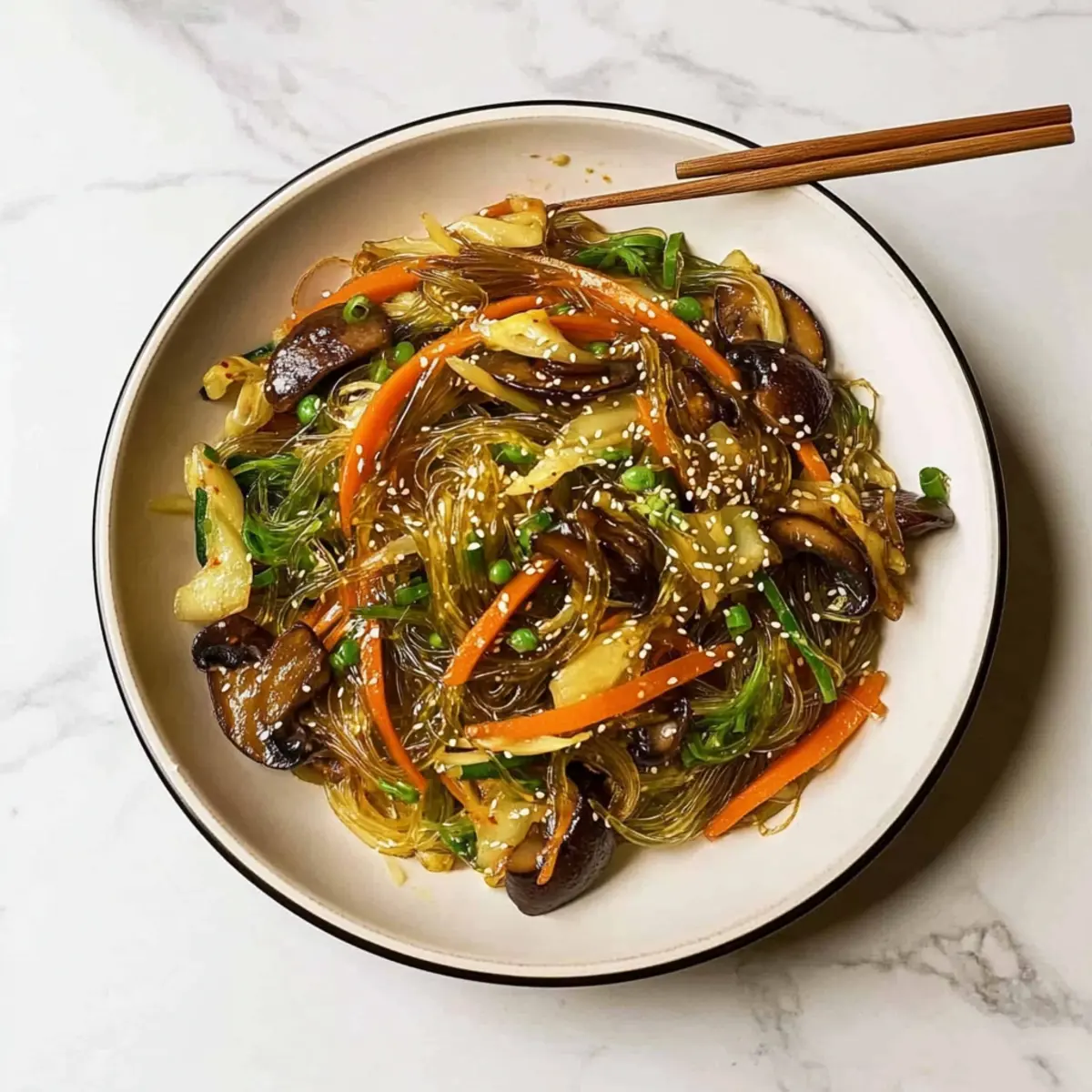
Expert Tips for Vegetable Japchae
-
Seasonal Veggies: Choose fresh vegetables based on seasonal availability for the best flavor and nutrition. Don’t be afraid to mix it up and personalize your Vegetable Japchae!
-
Don’t Overcook Noodles: Glass noodles are easy to overcook! Keep a close eye on them and drain as soon as they’re tender yet chewy for the perfect texture.
-
Separate Sautéing: Sauté vegetables individually to preserve their distinct textures and flavors. This avoids mushy veggies and ensures your Vegetable Japchae remains vibrant and colorful.
-
Taste as You Go: Always taste your sauce as you add ingredients. Adjust sweetness and saltiness according to your personal preference for the most satisfying flavor!
-
Serving Temperature: Vegetable Japchae is delicious served warm or at room temperature. Great for meal prep, just store in the fridge and reheat gently!
How to Store and Freeze Vegetable Japchae
Fridge: Store leftover Vegetable Japchae in an airtight container for up to 2 days. Reheat gently in a skillet, adding a splash of water to restore moisture if needed.
Freezer: You can freeze Vegetable Japchae for up to 1 month. Place it in a freezer-safe container, ensuring it’s tightly sealed to prevent freezer burn.
Thawing: To enjoy your frozen Vegetable Japchae, transfer it to the fridge overnight to thaw. Reheat in a pan over medium heat until heated through.
Make-Ahead: Prepare Vegetable Japchae in advance for busy nights; simply follow the original recipe, cool it completely, and store it in the fridge for easy weekday meals!
Make Ahead Options
These Vegetable Japchae are perfect for meal prep enthusiasts! You can chop the vegetables (onions, carrots, and mushrooms) and store them in an airtight container in the refrigerator for up to 3 days. Additionally, the dried shiitake mushrooms can be soaked in advance and kept in the fridge for a day. When you’re ready to serve, simply sauté the prepped vegetables and combine them with the cooked glass noodles, soy sauce, and honey mixture. Drizzle with sesame oil and garnish with sesame seeds right before serving to maintain their crunch. This ensures you’ll have a delicious, homemade Vegetable Japchae ready with minimal effort on busy weeknights!
Vegetable Japchae Variations
Feel free to unleash your creativity with these delicious twists that will elevate your Vegetable Japchae experience!
-
Extra Veggies: Enhance nutrition and color by adding zucchini or bell peppers. Their sweetness will harmonize beautifully with the other ingredients!
-
Protein Boost: Toss in some tofu or diced chicken for a heartier dish. This addition not only adds protein but also makes your Japchae more filling, perfect for a satisfying meal.
-
Spicy Kick: Sprinkle in some chili flakes or stir in gochujang for unexpected heat. The spice complements the sweetness and creates a delicious flavor contrast, bringing excitement to each bite.
-
Nutty Flavor: Mix in some crushed peanuts or cashews before serving. Their crunchy texture adds depth to the dish, making every forkful a delightful surprise!
-
Mushroom Variety: Switch up the types of mushrooms you use. Try earthy portobello or delicate enoki for a different flavor profile that transforms the dish!
-
Asian-Inspired Sauce: Experiment with hoisin or oyster sauce instead of soy sauce. This substitution infuses unique flavors, turning your classic dish into something extraordinary—definitely a talk of the dinner table!
-
Herb Infusion: Add freshly chopped cilantro or Thai basil for an aromatic twist. Fresh herbs elevate the dish, imparting a refreshing essence that’s reminiscent of dining at a cozy bistro.
-
Flavorful Oil: Drizzle with chili oil instead of sesame oil before serving. This simple change adds a delightful layer of spice and fragrance that will surely captivate your senses!
Whichever variation you choose, don’t forget to enjoy your vibrant Vegetable Japchae as a complete meal or paired alongside delicious sides like Roasted Root Vegetables for a wholesome dining experience!
What to Serve with Savory Vegetable Japchae?
Transform your Vegetable Japchae into a delightful feast with these perfect pairings that bring out the best of every flavor.
-
Korean BBQ Short Ribs: These tender, marinated short ribs add richness and depth, balancing the light flavors of the noodles beautifully.
-
Spicy Kimchi: A side of kimchi brings a punchy and spicy contrast to the sweetness of the Vegetable Japchae, enhancing every bite.
-
Crispy Tofu:
Crispy tofu serves as a protein-packed addition that complements the flavors and adds delightful texture for a satisfying meal. -
Miso Soup: This warm, umami-rich soup provides a soothing contrast and brings a comforting touch to the dinner table.
-
Garlic Edamame: These lightly salted, hand-steamed edamame pods offer a crunchy texture and fresh flavors that pair wonderfully with the noodles.
-
Asian Slaw: A refreshing, tangy slaw made with cabbage and carrots adds a nice crunch and a blend of flavors to your meal.
-
Green Tea: A calming cup of green tea enhances the overall experience, cleansing the palate and offering a light, refreshing finish.
-
Mango Sticky Rice: For dessert, this sweet treat with coconut milk and fresh mango creates a beautiful end to your dinner, harmonizing with the flavors of the main dish.
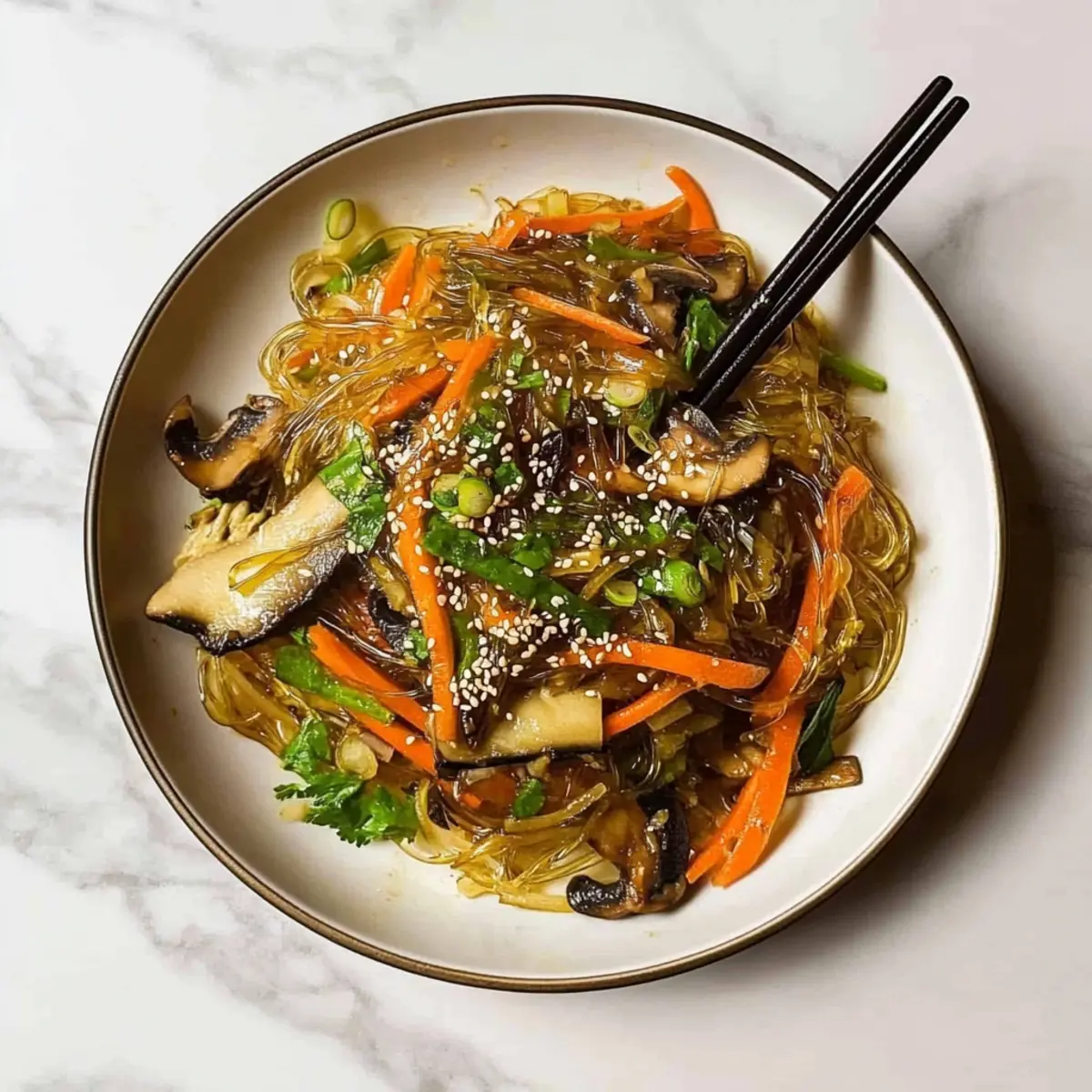
Vegetable Japchae Recipe FAQs
What type of mushrooms should I use for Vegetable Japchae?
Absolutely! Dried shiitake mushrooms bring depth of flavor to the dish. If you can’t find them, fresh mushrooms like button or cremini are great substitutions. Just sauté them until they’re tender—about 3-5 minutes—and you’ll still get a lovely umami kick!
How should I store leftover Vegetable Japchae?
Store any leftover Vegetable Japchae in an airtight container in the fridge for up to 2 days. When you’re ready to enjoy it again, simply reheat it gently in a skillet to maintain that delightful texture—add a splash of water if it seems dry!
Can I freeze Vegetable Japchae for later?
Certainly! You can freeze Vegetable Japchae for up to 1 month. To do this, let it cool completely, then place it in a freezer-safe container, ensuring it’s tightly sealed to avoid freezer burn. For the best results, thaw it in the fridge overnight before reheating.
What if my glass noodles are overcooked?
No worries! Overcooked glass noodles can lose their desired chewy texture. If you find yourself in this situation, consider adding a bit more soy sauce or sesame oil when reheating to help restore some moisture and flavor. You can even mix in some fresh veggies to add a crunch!
Is Vegetable Japchae gluten-free?
Yes, you can make a gluten-free version by substituting regular soy sauce with tamari. Just ensure all other components, such as the noodles, do not contain gluten, and you’ll have a delicious dish suitable for those with gluten sensitivities.
Can dogs eat Vegetable Japchae?
While it’s not harmful for dogs to have the occasional veggie, you should avoid giving them soy sauce due to its high sodium content and certain vegetables like onions, which can be toxic to dogs. Always consult your vet before introducing new food to your pet’s diet.
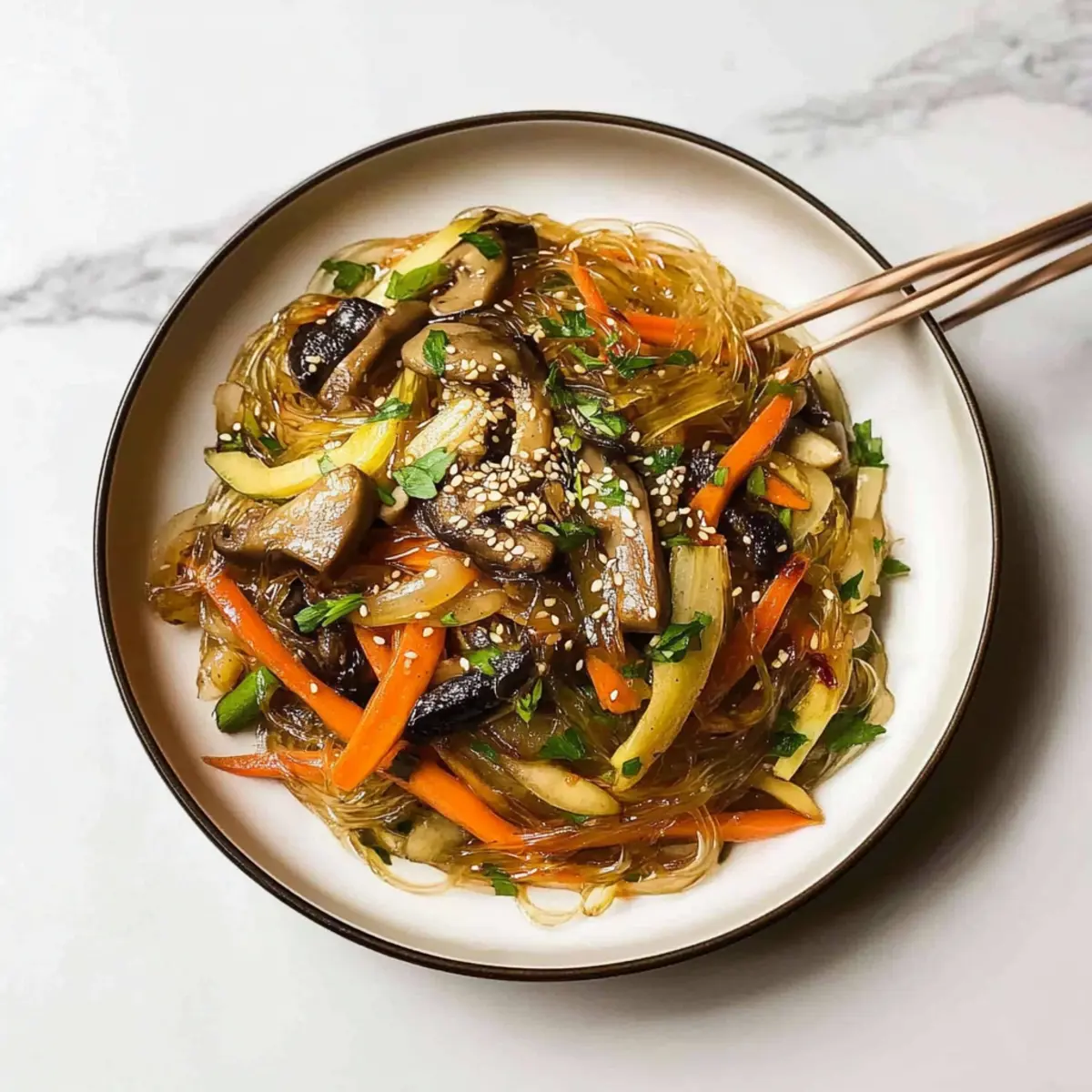
Delicious Vegetable Japchae: A Colorful Noodle Delight
Ingredients
Equipment
Method
- Rehydrate shiitake mushrooms by soaking them in lukewarm water for about 10 minutes. Drain and slice into strips.
- Blanch bean sprouts in boiling water for 2 minutes, then drain and set aside.
- Slice onions, carrots, and mushrooms into thin strips.
- Sauté onions in neutral oil in a skillet for 1-2 minutes until fragrant.
- Sauté carrots for 2-3 minutes, then add shiitake and fresh mushrooms until tender.
- Cook glass noodles in boiling water for 8 minutes, then drain and rinse with cold water.
- Combine cooked noodles with soy sauce, honey, and neutral oil in a pan, cooking for 3 minutes.
- Add sautéed vegetables and gently stir to combine.
- Finish by drizzling sesame oil and sprinkling with toasted sesame seeds.
Leave a Reply