
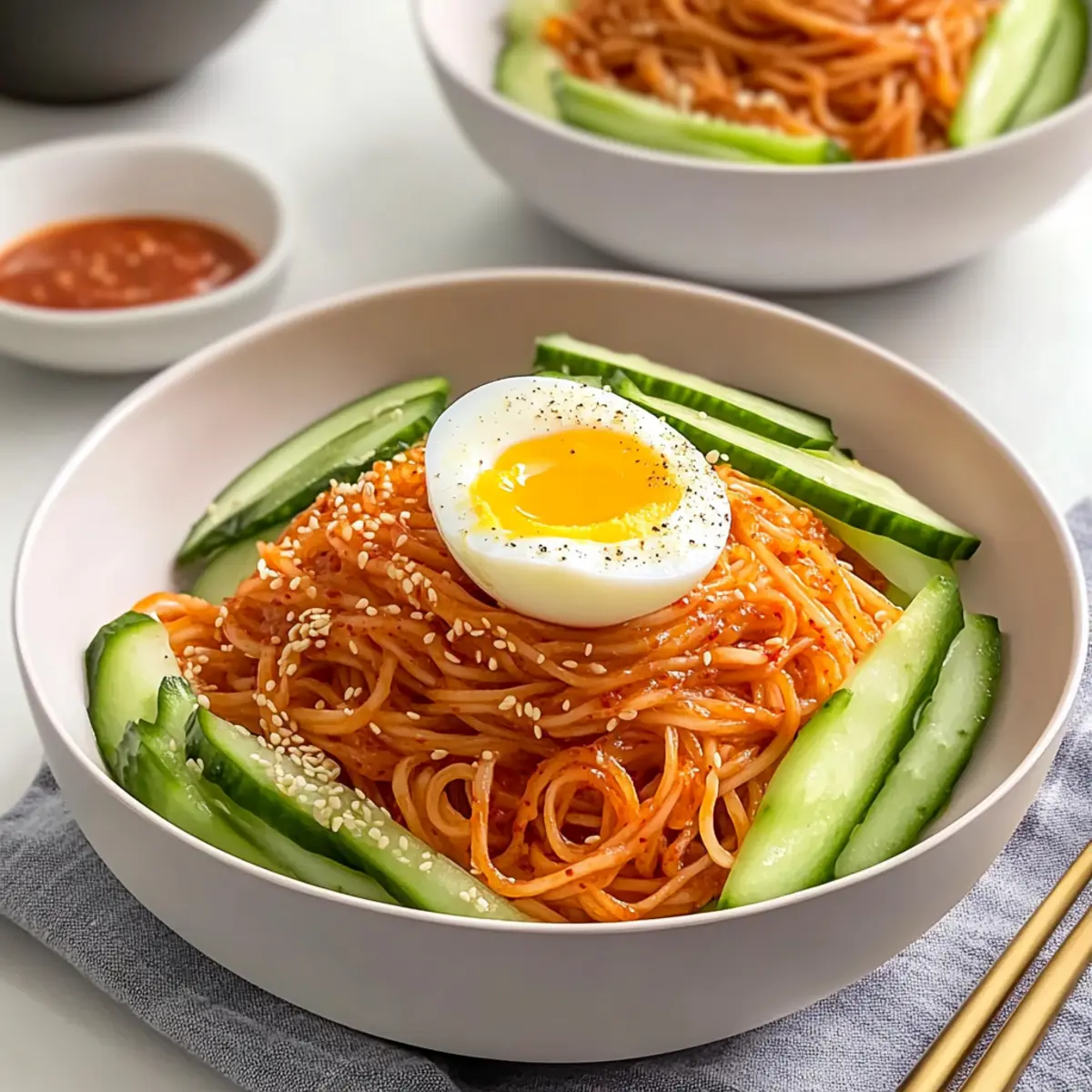
As I dived into the vibrant world of Korean cuisine, I stumbled upon an unexpected gem: Bibim Guksu. This delightful dish not only tantalizes the taste buds but also embodies the essence of summer with its spicy, refreshing concoction. Perfect for those scorching days when cooking feels like a chore, this 10-Minute Bibim Guksu recipe delivers delightful, chewy somyeon noodles coated in a sweet and fiery gochujang sauce. Plus, it’s wonderfully versatile—easily tailored to suit vegan diets or those looking to sneak in more veggies. Imagine impressing your friends with this stunning bowl of color and flavor at your next gathering! What tantalizing toppings will you choose to make it your own?
Why Try Bibim Guksu Today?
Quick and Easy: In just 10 minutes, you can whip up this vibrant dish, making it perfect for busy weekdays or unexpected guests.
Spicy, Sweet Harmony: The delightful mix of gochujang and honey gives your taste buds a dance like no other!
Healthy and Fresh: Packed with crunchy veggies like cucumbers, it’s a refreshing way to satisfy hunger while sneaking in nutrition.
Versatile Delight: Customize your bowl! Add tofu or your favorite protein for a heartier meal, or stick to the basics for a light dish.
Crowd-Pleaser: Impress your friends at gatherings—this colorful, flavorful bowl will have everyone wanting the recipe, especially if you pair it with a delicious treat like Viral Tiramisu Chia Pudding.
Bibim Guksu Ingredients
• Discover what makes these Korean Spicy Cold Noodles so delightful!
For the Noodles
• Somyeon Noodles – Thin wheat flour noodles that provide a chewy texture; essential for authenticity.
For the Sauce
• Gochujang – Korean chili paste that offers sweetness and heat; can be replaced with sriracha for a similar flavor.
• Gochugaru – Korean red pepper flakes for additional spiciness; can substitute with cayenne pepper if unavailable.
• Soy Sauce – Adds umami depth; gluten-free soy sauce can be used for gluten-free diets.
• Sesame Oil – Provides a toasty flavor; any neutral oil can be used, but it will alter the taste slightly.
• Rice Vinegar – Contributes tang; can substitute with apple cider vinegar for a different note.
• Garlic – Freshly minced for pungency; powdered garlic can be used in a pinch.
• Honey – Adds sweetness; agave syrup can be a vegan alternative.
• Sesame Seeds – Garnish for nutty flavor; can use crushed nuts as an alternative.
For Serving
• Cucumber – Freshness and crunch; can swap for julienned carrots or bell peppers for variety.
• Soft-Boiled Egg – Adds richness and protein; omit for a vegan version.
• Kimchi – Optional condiment for additional flavor; any pickled vegetable can be substituted.
Now you’re ready to create a beautifully vibrant Bibim Guksu that’s bound to impress!
Step-by-Step Instructions for 10-Minute Bibim Guksu
Step 1: Make the Sauce
In a medium bowl, combine 2 tablespoons of gochujang, 1 tablespoon of gochugaru, 2 tablespoons of soy sauce, 1 tablespoon of sesame oil, 1 tablespoon of rice vinegar, 1 minced garlic clove, and 1 tablespoon of honey. Stir well for about 1 minute until all ingredients are blended smoothly. You should see a vibrant, thick sauce that’s ruby red, hinting at the spicy goodness to come.
Step 2: Cook the Noodles
Bring a pot of water to a rolling boil and cook 4 ounces of somyeon noodles according to the package instructions, usually about 4-5 minutes. Once cooked, drain the noodles in a colander and rinse them under cold running water for 1-2 minutes until completely cooled. This step helps achieve that perfect chewy texture and prevents the noodles from sticking together.
Step 3: Combine
In a large mixing bowl, add the cooled somyeon noodles and pour the prepared sauce over them. Using tongs, gently toss the noodles for about 30 seconds, ensuring each strand is well-coated in the colorful sauce. You’ll know it’s ready when the noodles turn wonderfully red and glossy, giving off a mouthwatering aroma.
Step 4: Serve
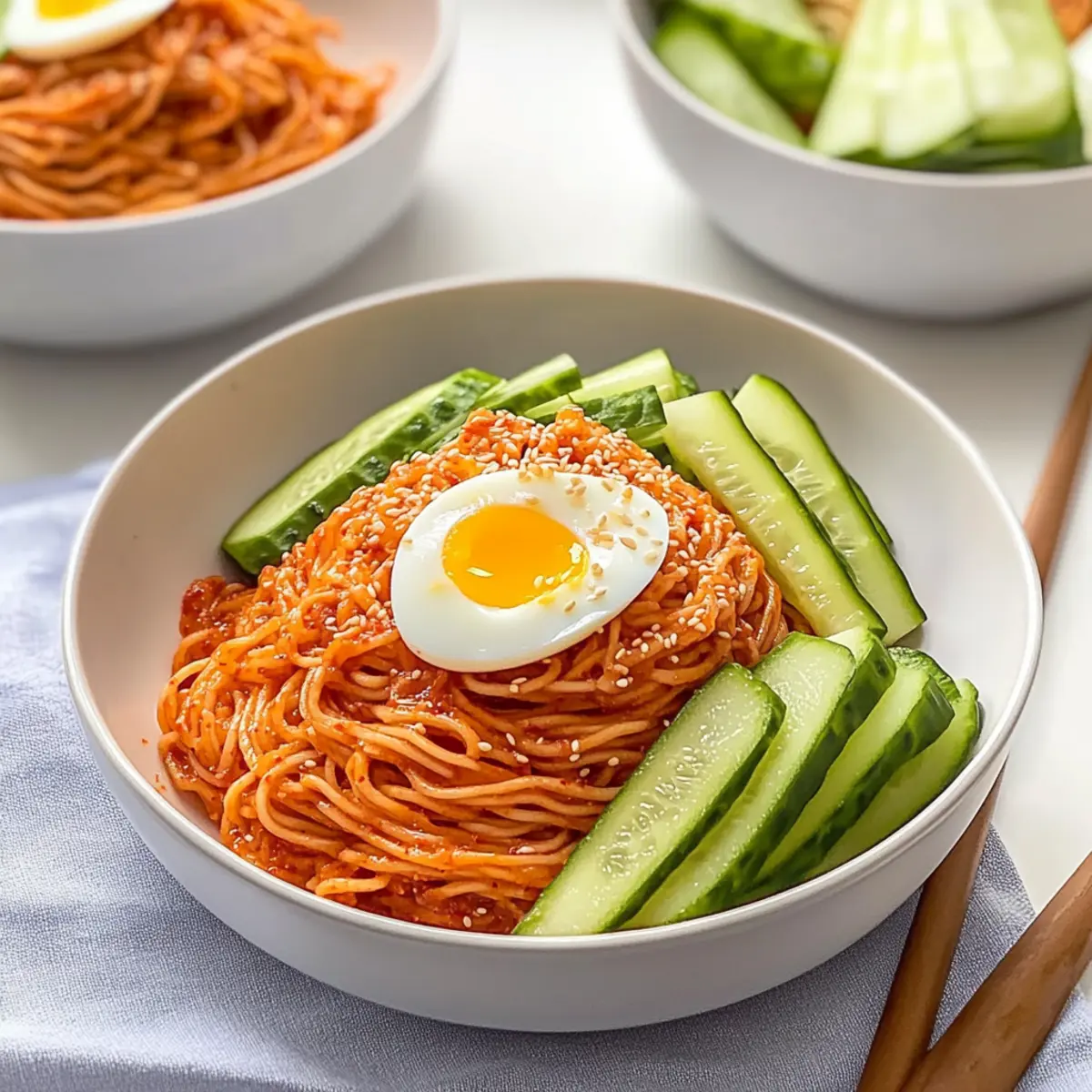
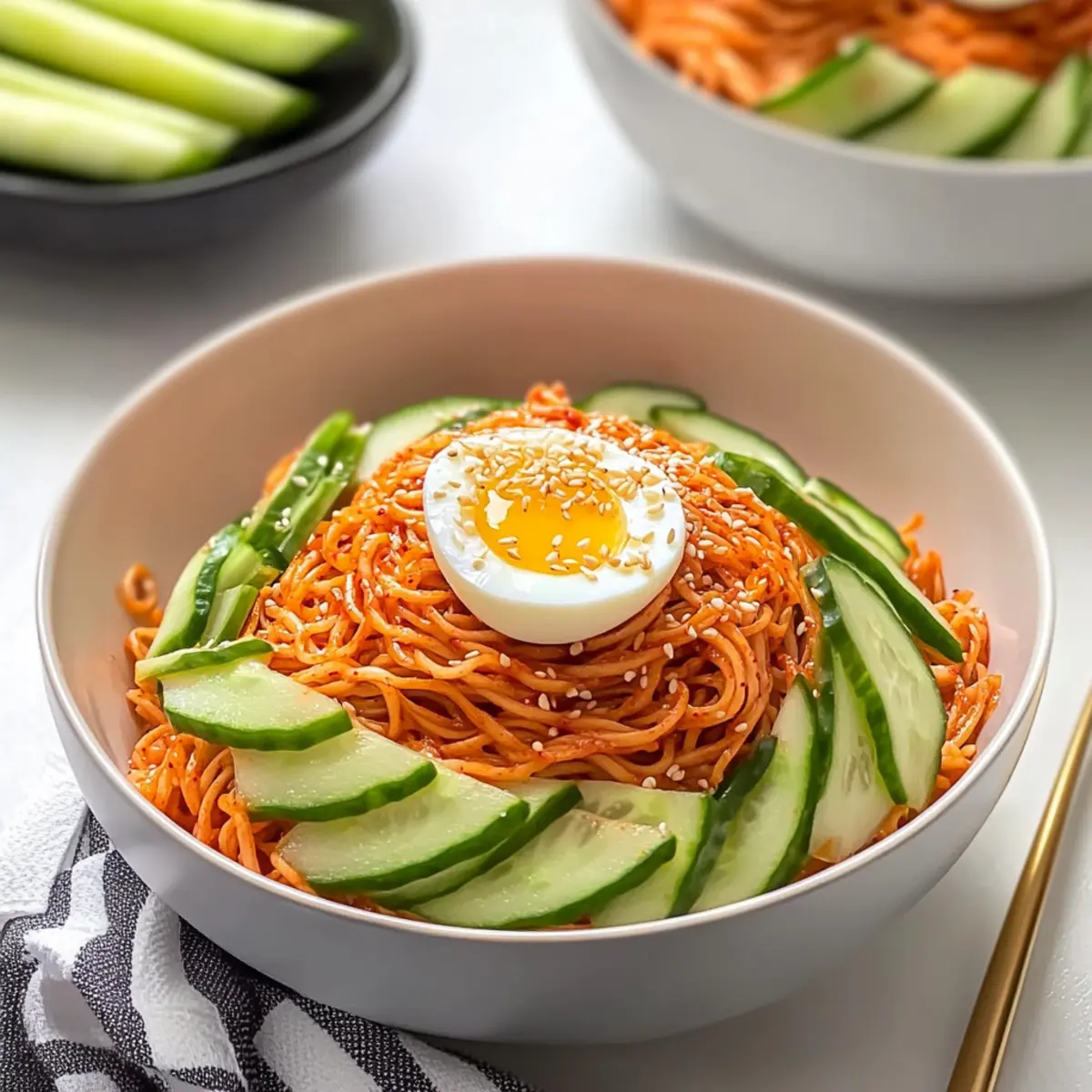
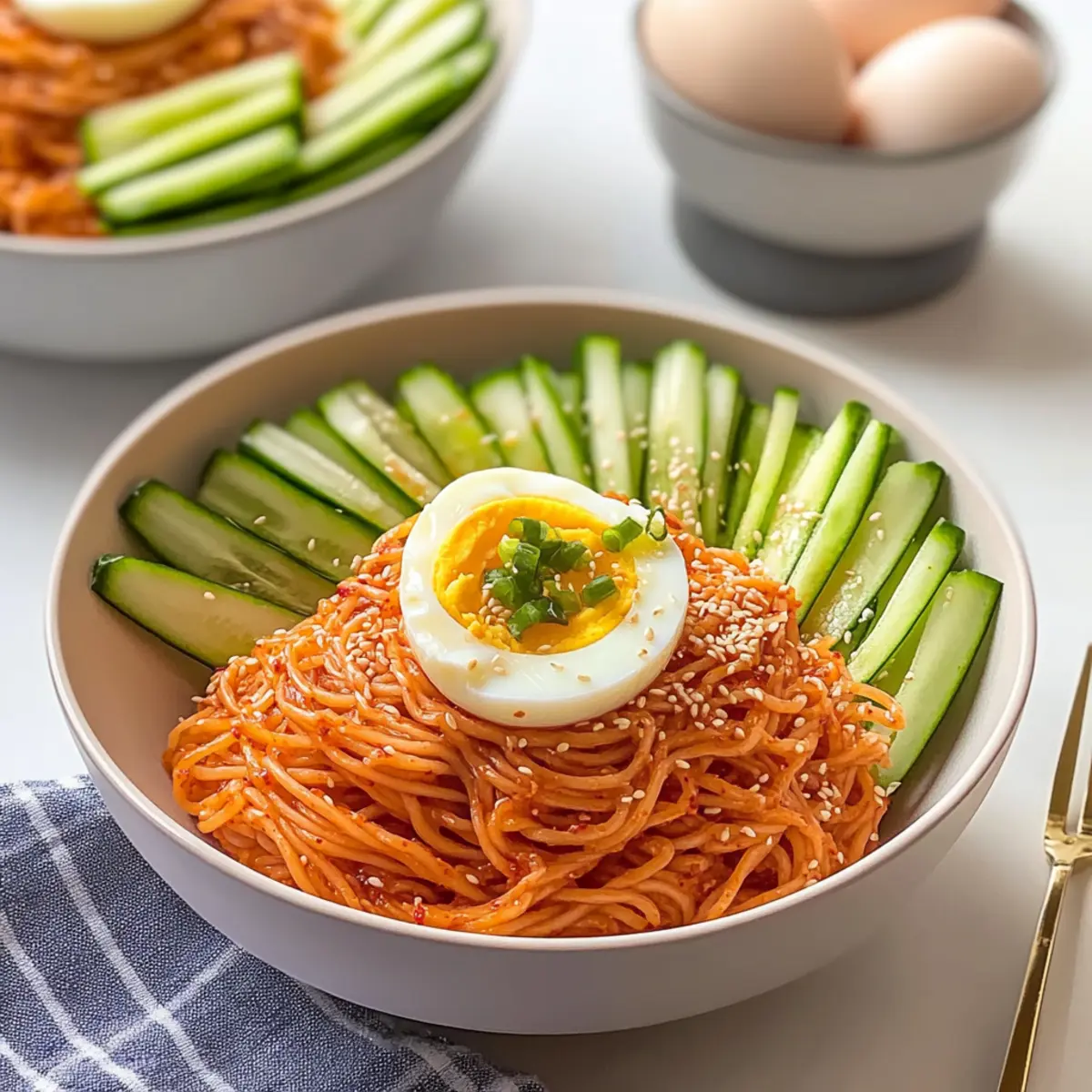
Take the beautifully coated noodles and plates them into serving bowls. Garnish with generously sliced cucumbers for a refreshing crunch and add a soft-boiled egg cut in half on top for added richness. Sprinkle extra sesame seeds for a nutty finish and, if desired, serve with a side of kimchi for that traditional touch. Dive in right away to enjoy the splendid flavors of Bibim Guksu!
Variations & Substitutions for Bibim Guksu
Feel free to get creative with your Bibim Guksu and tailor it to your taste preferences or dietary needs!
-
Vegan-Friendly: Omit the soft-boiled egg and replace honey with agave syrup for a completely plant-based dish.
Watching your ingredients can make a difference! You’ll still enjoy the rich flavors without sacrificing taste. -
Extra Veggies: Add shredded cabbage, bean sprouts, or finely chopped spinach to boost nutrition and color.
Each added vegetable brings its own unique flavor and texture, making every bite a little adventure! -
Protein Boost: Stir in cooked tofu, rotisserie chicken, or sautéed shrimp for a heartier meal.
A protein-packed bowl can turn this quick dish into a satisfying dinner option that everyone will love. -
Flavorful Sauces: Switch up the flavor profile by adding a few drops of sesame chili oil for an extra kick or a splash of rice wine vinegar for added tang.
Don’t be afraid to experiment! A little splash here and there can create a whole new experience. -
Texture Twists: Mix in crispy fried shallots or toasted peanuts for an unexpected crunch that elevates your dish.
These delightful additions can change the entire front of flavors while making it incredibly enjoyable. -
Spice it Up: Adjust the heat to your liking by varying the amount of gochugaru or substituting with sambal oelek.
Your heat preference should always come first—customize it until it’s just right for you! -
Noodle Alternatives: If somyeon noodles aren’t available, try using soba or rice noodles for a different texture.
Each noodle type offers unique characteristics, ensuring you can recreate this dish no matter what you have on hand.
Don’t forget that these variations can all blend beautifully together, so why not experiment a little? If you’re craving more delightful recipes, why not check out this gorgeous Cinnamon Chia Pudding or indulge in some Tiramisu Truffles Decadent for dessert? Enjoy your culinary adventure!
What to Serve with 10-Minute Bibim Guksu?
Enhance your dining experience with these delightful pairings that beautifully complement the vibrant flavors of this Korean dish.
- Cucumber Salad: A light, tangy cucumber salad adds an extra crunch and freshness, balancing the heat of the bibim guksu.
- Korean Fried Tofu: Crispy, golden fried tofu paired with a soy dipping sauce provides a satisfying, protein-packed option that contrasts the chewy noodles.
- Kimchi: No Korean meal is complete without kimchi! Its spicy, fermented goodness offers a burst of flavor alongside the cold noodles, enhancing the overall experience.
- Steamed Dumplings: Serve these savory bites to add a comforting texture to your meal; they’re perfect for sharing and pair deliciously with the spicy noodles.
- Edamame: Lightly salted edamame is a great snack that complements the meal, adding a touch of earthiness that balances the dish’s bright flavors.
- Iced Green Tea: Refreshing and caffeine-free, iced green tea cleanses the palate and accompanies the bold flavors without overpowering them.
- Mango Sticky Rice: For dessert, indulge in a sweet treat like mango sticky rice that offers a delightful contrast to the spiciness of bibim guksu.
Make Ahead Options
Bibim Guksu is perfect for meal prep enthusiasts! You can prepare the sauce up to 24 hours in advance, mixing the gochujang, gochugaru, soy sauce, sesame oil, rice vinegar, garlic, and honey (to maintain flavor, store it in an airtight container in the fridge). Also, you can cook and chill the somyeon noodles up to 3 days ahead; simply rinse them in cold water to prevent sticking. When you’re ready to serve, just toss the chilled noodles with the prepared sauce, and garnish with cucumbers, a soft-boiled egg, and sesame seeds. This way, you can enjoy a refreshing bowl of Bibim Guksu with minimal last-minute effort!
Storage Tips for Bibim Guksu
Fridge: Store leftover Bibim Guksu in an airtight container for up to 3 days. Ensure the noodles are fully cooled before sealing to maintain their texture.
Freezer: For longer storage, freeze the sauce separately in an airtight container for up to 1 month. Reheat on low heat before combining with fresh, cooked noodles.
Serving Temperature: Serve Bibim Guksu cold for the best flavor and experience. Avoid reheating as it can alter the delightful texture of the Korean Spicy Cold Noodles.
Garnish Storage: Keep garnishes like cucumbers and eggs separate until ready to serve, ensuring they stay fresh and crunchy!
Expert Tips for Bibim Guksu
Optimal Cooling: Ensure the noodles are thoroughly cooled after rinsing to achieve the perfect chewy texture that complements the Korean Spicy Cold Noodles.
Garnish Wisely: Top with fresh ingredients like sliced cucumbers and soft-boiled eggs for added crunch and creaminess; these enhance the enjoyment and presentation!
Customize Heat: If you prefer a milder dish, start with less gochugaru and adjust gradually. It’s easier to add heat than to take it away!
Sauce Consistency: Mix the sauce well until it’s smooth and glossy; a well-blended sauce clings beautifully to the noodles, making each bite delicious!
Try Different Veggies: Experiment with additional toppings, like julienned carrots or bean sprouts, to add color and extra nutrients while keeping the dish fresh and exciting.
Bibim Guksu Recipe FAQs
How do I choose the right somyeon noodles for Bibim Guksu?
When selecting somyeon noodles, look for thin, chewy wheat flour noodles in the Asian aisle of your grocery store. They should be smooth without any dark spots or blemishes. Authentic somyeon will make a big difference in the texture of your dish!
How do I store leftover Bibim Guksu?
Absolutely! Store your leftover Bibim Guksu in an airtight container in the refrigerator for up to 3 days. Make sure the noodles have completely cooled before sealing them. For the best flavor and texture, it’s best enjoyed cold, so skip reheating.
Can I freeze Bibim Guksu?
Certainly! To freeze Bibim Guksu, it’s best to freeze the sauce separately. Store it in an airtight container for up to 1 month. When you’re ready to enjoy, simply thaw the sauce in the refrigerator overnight, cook fresh somyeon noodles, and then combine for a delightful meal.
What if my noodles are sticky after cooking?
No worries! If your somyeon noodles are sticky, rinse them under cold water for 1-2 minutes right after draining; this helps separate the noodles. The cooling step is crucial for achieving the delightful chewiness that makes Bibim Guksu special.
Is there a vegan option for this recipe?
Very! To make this Bibim Guksu recipe vegan, simply omit the soft-boiled egg and replace honey with agave syrup. You can also add plant-based proteins like tofu or tempeh to enrich the dish. Enjoy customizing it to suit your dietary preferences!
Can pets eat Bibim Guksu?
While the ingredients in Bibim Guksu are generally safe for human consumption, it’s not advisable to share this dish with pets. The spicy gochujang and soy sauce can be harmful to them. Always consult your vet before introducing new food to your pet’s diet.
Viral Tiramisu Chia Pudding: Deliciously Indulgent & Easy!
Ingredients
Equipment
Method
- In a mixing bowl, whisk together chia seeds, almond milk, vanilla extract, and maple syrup until well combined.
- Let the mixture sit for about 5 minutes, then whisk again to prevent clumping.
- Stir in the coffee for the tiramisu flavor.
- Cover the bowl and place it in the refrigerator to chill for at least 30 minutes or until it thickens.
- Once thickened, give the pudding a good stir and layer it in serving glasses.
- Dust with cocoa powder and top with chocolate chips if desired.
- Serve chilled and enjoy your delicious Viral Tiramisu Chia Pudding!
Leave a Reply